Tourism destination management is a coordinated approach to managing all the elements that make up a tourist destination. Including products, services, and infrastructure to improve competitiveness and ensure long-term sustainability. It is a holistic process that involves integrated planning, implementation, and monitoring by engaging all stakeholders to create a quality tourist experience and encourage recurring visits.
Tourism destination management is the key to turning a location into a superior and sustainable tourist destination. By integrating strategic planning, marketing, stakeholder collaboration, and environmental quality management, a destination can achieve a competitive advantage that not only attracts tourists but also ensures economic, social, and cultural sustainability for the future.
Strategic components of destination management
To achieve competitiveness and sustainability, tourism destination management needs to pay attention to four interrelated strategic pillars. These four components serve as a holistic framework that ensures every aspect of the destination is professionally managed, coordinated, and long-term goal-oriented.
1. Strategic Planning and Policy
The first and most fundamental pillar is strategic planning and policy. This component serves as the foundation that directs all destination development efforts. Without careful planning, the development will run sporadically, inefficiently, and risk having negative impacts.
- Preparation of Vision and Mission: This process involves setting clear and measurable long-term goals. The vision determines the ideal ideals of future destinations, while the mission outlines the main steps to achieve them.
- Development Roadmap: Strategic planning includes the preparation of road maps (Roadmap) medium and long term development. This road map details the priorities of infrastructure development, tourism product development, and gradual allocation of resources.
- Adaptive Policy Formulation: The formulated policy must be able to adapt to changes in market trends, social dynamics, and environmental challenges. This ensures the destination remains relevant and competitive over time.
2. Marketing and Promotion
Having had a solid plan, the next pillar is marketing and promotion. The goal is to build a strong destination image, reach the right target market, and ultimately encourage an increase in quality tourist visits.
- Destination Branding: This is an attempt to create a unique identity that distinguishes the destination from its competitors. Effective branding communicates the main selling valueUnique Selling Proposition) and the typical destination story .
- Integrated Marketing Strategy: Modern promotion is no longer enough just by conventional methods. This strategy integrates various channels, including digital marketing, search engine optimization (SEO), social media campaigns, and collaboration with influencer .
- Promotion Partnerships: Cooperation with professional consultants, travel agencies, and media is essential to expand the reach of promotions and increase credibility in the eyes of potential tourists.
Also read: Disassemble the tourism strategic planning formula that can change everything!
3. Stakeholder Management (Stakeholder Management)
Destination management is not the task of one party, but a collaborative effort. The stakeholder management pillar emphasizes the importance of building synergy and harmony among all parties involved and affected by tourism.
- Identification and engagement: The first step is to identify all stakeholders. Starting from the government, industry players (hotels, restaurants, travel agencies), to local people, academics, and the media.
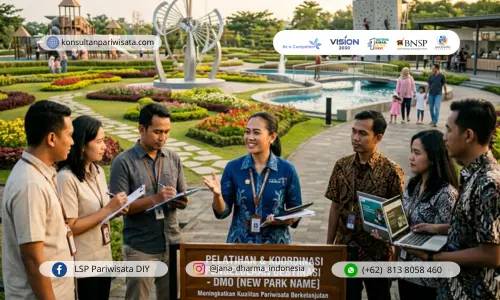
- Coordination Mechanisms: A structured forum or communication mechanism is needed to align goals, manage potential conflicts, and ensure that all parties move in the same direction. The collaboration between the Tourism Office and the Village Government in Ciamis is a clear example of this coordination.
- Local community empowerment: active involvement of local communities in the planning and management process is the key to sustainability. This not only ensures the economic benefits are felt equally, but also strengthens the sense of belonging (Sense of ownership) to the destination.
4. Quality and environmental management
The last pillar that determines sustainability is quality and environmental management. This component ensures that the growth of tourism does not sacrifice the quality of the tourist experience as well as the preservation of natural and cultural assets that are the main attraction.
- Implementation of Quality Standards: The implementation of international standards such as CHSE (Cleanliness, Health, Safety, and Environment Sustainability) is very crucial. This standard guarantees cleanliness, health, safety, and environmental sustainability in all tourist facilities and services.
- Impact Monitoring: Good management involves regular monitoring of the impact of tourism on the environment (e.g., waste and water management) and socio-cultural. Monitoring data is useful as a basis for continuous improvement.
- Conservation and Education: This effort involves actively ecosystem conservation programs and cultural heritage. Socialization and education to the public and tourists, managers need to strengthen to raise collective awareness of the importance of preserving destinations.
The traditional paradigm in measuring the success of tourism destinations is often trapped in quantitative metrics, namely the number of visits or the volume of tourists. However, this approach proved to be no longer adequate to ensure the survival of a destination. According to the analysis Menstruation et al. (2021), the true benchmark of the success of tourist destination management has shifted fundamentally.
Success is now no longer measurable by how many people come, but from the competitiveness of sustainable destinations. This competitiveness is defined as the ability of a destination to consistently attract and retain tourists, encouraging them to visit repeatedly. The key to this ability lies in the value of sustainability that tourists feel and gain during their visit.
Redefining the successful quality management of tourism destinations
Relying on the volume of visits as the only indicator of success is a dangerous short-term strategy. This approach can trigger Overtourism, which leads to environmental degradation, excessive commercialization of culture, and a decline in the quality of tourist experience. Instead, the new success model focuses on higher quality metrics.
Competitiveness-based success indicators:
- Revisit rate (Repeat Visitation Rate): Percentage of tourists returning to the destination. High numbers indicate deep satisfaction and loyalty.
- tourist satisfaction level (Visitor Satisfaction Index): Measured through surveys and reviews, this metric provides a direct overview of the quality of the experience offered.
- word of mouth recommendation (Word-of-mouth): The willingness of tourists to recommend destinations to others, either verbally or through digital reviews.
- Local Economic Impact: How much tourism income do local people really feel, not just by big investors. It reflects inclusive tourism.
Sustainability value: the main magnet for repeated visits
The question then is, what encourages tourists to return? According to Haid et al. (2021), the answer is the value of sustainability. This is a tourist perception that the destination is managed responsibly, offering an authentic experience, and having a positive impact on the environment and its people. This value is constructed from several fundamental elements.
Key elements of sustainability value that tourists feel:
- Authenticity of culture is preserved: modern tourists are looking for authentic experiences, not made-up shows. Destinations that have succeeded in empowering local communities to preserve and display their culture sincerely will create strong emotional connections.
- Real environmental sustainability: clean and well-maintained natural beauty is a vital asset. Good waste management practices, ecosystem conservation, and the application of environmental standards such as CHSE demonstrate the commitment of destinations that are highly respected by tourists.
- Meaningful and educative experience: A destination that offers more than just a place to take pictures, but also provides insight, learning, and genuine interaction with the local community, will leave a deep impression and encourage the desire to return.
- Visible community engagement: When tourists see that tourism brings real benefits to locals. For example, through small businesses that residents manage or empowerment programs. This increases the positive image and respect for the destination.
Also read: tourist satisfaction and how to measure it that the consultant needs to understand
Example of sustainable tourism destination management: Situ Lengkong Case Study
The ideal practice of sustainable tourism destination management can be seen clearly through real initiatives in the field. One of the best examples is Management of Situ Lengkong Tourism Destinations in Ciamis Regency, which is a model of how strategic collaboration between the government and the community can create competitiveness while maintaining sustainability. The initiative of the Tourism Office and the local village government directly applies the pillars of destination management that we discussed earlier.
Synergistic Collaboration: The Key to Local Empowerment
The foundation of the success of the management of Situ Lengkong lies in a strong synergy between the Tourism Office and the Village Government. This is a real embodiment of the stakeholder management pillar (Stakeholder Management) . Instead of moving independently, these two entities form strategic partnerships to ensure each program runs effectively and on target.
This collaboration is not only limited to coordination, but also a clear division of roles. The Tourism Office acts as a facilitator and provider of expertise resources, while the village government is at the forefront of the implementation and mobilization of the community. This model ensures that policies from the district level can be translated into real actions relevant to local conditions.
Local Capacity Building: Investment in Human Resources
One of the flagship programs in the management of Situ Lengkong is training, coaching, and skills improvement for local communities. This is a crucial long-term investment, because competent human resources are the main assets in the tourism service industry.
Forms of Skill Improvement Intervention
- Hospitality and service training: teaches excellent service standards to people who interact directly with tourists, ranging from boat managers, traders, to local guides.
- Entrepreneurship Development: Encouraging people to create derivative products and services, such as typical handicrafts, local culinary, or creative tourism packages. This is so that the economic benefits of tourism are evenly distributed.
- Digital Skills Improvement: Provides basic training on how to use social media and digital platforms to promote their own business, in line with the overall destination marketing strategy.
This step directly builds authentic sustainability values. Tourists not only get better service, but also feel sincere interactions with people who are empowered and proud of their destinations.
modern marketing and directed promotion
To increase visibility and attract visits, Situ Lengkong’s marketing strategy is no longer dependent on conventional means. In line with the marketing and promotion pillars, the efforts made are multi-channel and directed.
- Promotion through digital media: Utilization of social media platforms, tourism websites, and collaboration with Travel Blogger used to reach a wider and younger audience. The content presented focuses on the unique nature and culture of Situ Lengkong.
- Organizing a Creative Contest: Holding a Photography Contest, Videography, or Writing About Situ Lengkong is a smart way to produce User-generated content (UGC). The content of these users has a higher level of confidence and serves as an organic promotion.
- Cooperation with Professional Consultants: The involvement of consultants assists in formulating strategies Branding Sharper and more structured marketing campaigns, ensuring each promotional budget is used effectively to achieve the target market the destination wants.
Commitment to environmental standards and sustainability
The most decisive aspect of Situ Lengkong’s sustainability is its commitment to quality and environmental management. This effort ensures that the natural beauty and cultural values that are the main attractions are not damaged by tourism activities.
Practical implementation in the field:
- Socialization and Implementation of CHSE Regulations: The Tourism Office actively socializes the standards of hygiene (cleanliness), health (health), safety (safety), and environmental sustainability to all business actors. Audits and regular mentoring are carried out to ensure that these standards are consistently adhered to.
- Active Involvement of Community Groups: Environmental conservation programs are not only the responsibility of the government. Tourism Awareness Community Groups (Pokdarwis) or environmental care communities are actively involved in conservation activities, such as cleaning the lake, planting trees, and waste management.
- Visitor Education: A campaign to maintain cleanliness and respect local wisdom is spread through information boards, social media, and direct appeals from the guide. This fosters a sense of shared responsibility between managers and tourists.
Through the Situ Lengkong case study, it is clear that successful tourism destination management is the result of a comprehensive strategy integration. From human empowerment, smart marketing, to unshakable commitment to sustainability, each element supports each other to build a destination that is not only crowded with tourists, but also people love and guard for future generations.
Also read: Learn the development of green tourism from the toughness of women in Bilebante
Utilizing AI applications in destination management
Artificial intelligence (AI) technology revolutionizes various industries, and the tourism sector is no exception. In the context of tourism destination management, AI is no longer just a futuristic concept, but a strategic tool that can significantly increase efficiency, personalization, and innovation. AI integration allows destination managers to make more accurate data-based decisions, optimize every strategic pillar of management, and ultimately build sustainable competitiveness that modern tourists seek.
1. Improved strategic planning and policy
AI provides strong predictive analytical capabilities, changing the way destination managers formulate strategic planning and policies. By analyzing the data set on a massive scale, AI can identify patterns and trends that are not visible by conventional analysis.
- demand prediction (Demand Forecasting): AI algorithm can analyze historical data of visits, online search trends, airline ticket prices, and even sentiment on social media to predict future tourist volume. This helps managers in planning the allocation of resources, crowd managementCrowd Control), and infrastructure readiness.
- Infrastructure development optimization: by modeling the movement of tourists and geospatial data, AI can provide data-based recommendations on optimal locations for the construction of new facilities. Such as hotels, restaurants, or transportation routes, to maximize accessibility and minimize environmental impacts.
- Policy Simulation: Before implementing a new policy (e.g., changes in ticket prices or area restrictions), AI can run simulations to predict its impact on income, tourist satisfaction, and local ecosystems. This reduces the risk of wrong decision making.
2. Marketing Revolution and Promotion of Destinations
In the pillars of marketing and promotion, AI allows personalization on an unprecedented scale, ensuring the right message reaches the right audience at the right time.
- Personalized hyper-targeted content: AI can analyze the digital footprint of potential travelers such as search history, social media interactions, and previous travel preferences to present highly personalized advertising and promotional content. For example, a solo adventurer will see a trekking advertisement, while a family will see a recreational park promotion.
- 24/7 traveler service chatbot: chatbot AI-powered can provide instant information to potential travelers about attractions, accommodation, and transportation at any time. This not only enhances the user experience but also frees human resources to focus on more complex tasks.
- Market sentiment analysis: AI can scan millions of online reviews, social media uploads, and blogs to measure public sentiment towards destinations Real-time. This analysis provides invaluable feedback to adjust branding strategies and address negative issues quickly.
3. Strengthening quality and environmental management
AI offers sophisticated monitoring and efficiency tools to strengthen the pillars of quality and environmental management, especially in the implementation of standards such as CHSE (Cleanliness, Health, Safety, Environment Sustainability).
- Automatic service quality monitoring: AI can analyze reviews and photos that travelers upload to automatically detect complaints related to cleanliness, safety, or quality of service in hotels and restaurants. This allows destination managers and business owners to respond to problems quickly.
- Intelligent energy and waste management: IoT sensor (Internet of Things) connected to the AI platform can optimize energy use in public facilities and hotels. This system can also predict the volume of waste to schedule more efficient transportation, supporting environmental sustainability.
- AI-based environmental monitoring: The use of drones with cameras and AI can monitor ecosystem health regularly, such as coral reef conditions, forest density, or coastal erosion. This data is crucial for conservation efforts and mitigation of tourism impacts.
4. Data analytics for superior traveler experience
The essence of all the above applications is the ability of AI to turn raw data into actionable insights (Actionable Insights). Data analytics with AI support is the foundation for creating superior tourist experiences and encouraging repetitive visits.
- tourist travel mapping (Visitor Journey Mapping): By analyzing data from public Wi-Fi, GPS, and transactions, AI can map how tourists move within destinations. This helps identify congestion points, underutilized attractions, and opportunities to create new experiences.
- Recommended Personalization Activities Real-time: AI-supported mobile apps can provide recommendations for activities, restaurants, or events Real-time to tourists based on their location, time, and preferences that have been studied.
- Anomaly and security detection: AI can monitor CCTV footage to automatically detect unusual behavior or dangerous situations. In addition, increasing the safety of tourists and local communities, in line with the components safety from CHSE.
By adopting AI technology, destination managers can go from reactive to proactive approaches. This is to anticipate the needs of tourists, manage resources more wisely, and ultimately build smarter, more efficient, and sustainable destinations.
Also read: 5 Coverage of tourism destination consulting services
List of Destination Management Training Now to Realize Sustainable Local Tourist Destinations
The implementation of the entire complex destination management strategy, from data analysis to community empowerment, is highly dependent on the capabilities and professionalism of the human resources who manage it. Destination managers are required to continue to adapt, innovate, and improve competence in order to be able to face challenges and take advantage of opportunities in the dynamic tourism industry.
To answer the need for reliable professionals in this field, we invite you to take the next step in your career. Improve your capabilities and become a driving force for world-class tourist destinations.
List of Tourism Destination Management Training is now only with us and get exclusive benefits:
- Comprehensive Understanding: Master the Destination Management Framework in depth, from strategic planning to field implementation.
- Practical Skills: Learn the latest digital marketing techniques, strategies Branding destinations, and effective community engagement methods.
- Best Case Study: Get direct insight from successful case study analysis, including innovative models in sustainable tourism.
- Professional network: build valuable connections with experts, experienced practitioners, and fellow professionals in the tourism industry from all over Indonesia.
- Recognized Certification: Obtain a training certificate as proof of your expertise and competence in tourism destination management.
Don’t miss this golden opportunity to invest in your expertise and contribute directly to advancing Indonesian tourism. Register yourself now!
For free consultation, contact us via:
WhatsApp: +62 813 8058 460 or +622123569054
Instagram: @jana_dharma_indonesia
Email : lspp.janadharmaindonesia@gmail.com