Beach tourism has become one of the main attractions in many countries, especially in Indonesia which is already famous for its beautiful beaches. The stunning natural beauty of the beach offers not only soothing views, but also great opportunities for economic growth through the tourism sector.
However, along with the increasing number of tourists, there are also big challenges in terms of nature management and conservation. This is where the importance of sustainable coastal tourism planning, which combines economic interests with the protection of ecosystems.
Effective coastal tourism planning requires attention to various aspects, from government regulations to the application of environmentally friendly ecotourism concepts. This article will discuss in full how planning beach tourism can apply the following important concepts.
Permenparekraf No. 9 Year 2021
Tourism planning in Indonesia is regulated through Permenparekraf No. 9 of 2021 concerning General Guidelines for the Development of Sustainable Tourism. One of the important emphasis in this regulation is the importance of maintaining a balance between economic development and environmental conservation. Especially in tourist areas that are prone to ecological damage such as the beach.
According to Permenparekraf, tourism management must maintain social, cultural, environmental aspects, and the sustainability of natural resources. Especially for coastal tourism, sustainable management involves regulating the capacity of visitors, monitoring tourism activities, and implementing environmentally friendly practices in every operational aspect.
For example, waste management and pollution in coastal areas should be a priority. This regulation emphasizes the importance of collaboration between government, communities, and the private sector in maintaining the quality of the coastal environment as a place of recreation. Thus, Permenparekraf No. 9 of 2021 is a guideline for the design of coastal tourism that is economically profitable and preserves nature. The following are important aspects of planning coastal tourism in accordance with these regulations.
important aspect in Beach tourism planning
A successful beach tourism planning must combine the needs of tourists with the need for nature conservation. This planning concept includes a variety of interrelated elements, from infrastructure design to environmental governance.
Environmentally friendly layout and infrastructure
First of all, coastal tourism planning must pay attention to spatial planning that does not damage the coastal ecosystem. This includes determining the zones that can be developed into tourist areas, as well as zones that must be protected. For example, areas of coral reefs and mangroves must be maintained so as not to be affected by development. The use of environmentally friendly building materials, the use of renewable energy, and an efficient clean water management system are also very necessary.
Raising awareness of the public and tourists
Second, it is important to increase public awareness and tourists about the importance of maintaining the cleanliness and preservation of the coastal nature. This can be done through education and training campaigns for local communities. In addition, through providing information to tourists about environmentally friendly behavior. Thus, visitors can feel more responsible in maintaining the cleanliness and preservation of the nature around them.
Improving the quality of human resources
The success of coastal tourism planning is also highly dependent on the quality of human resources (HR) involved in this sector. Therefore, the capacity development of human resources in terms of sustainable tourism management, nature conservation, and other technical skills needs to be considered. Training and certification for tour guides, hotel managers, restaurants, and local businesses around coastal tourist destinations will improve the quality of service and environmental awareness.
Also read: 7 Important Things in Planning a Successful Tourist Destination
beach tourism planning concept
Eco-Tourism Destination
One of the concepts that are developing in the world of tourism is Eco-Tourism Destination (ETD). Eco-Tourism Destination aims to promote and develop sustainable tourism potential by using strategies that will be applied according to the physical conditions of nature. Basically, the following is the principle Eco-Tourism Destination.
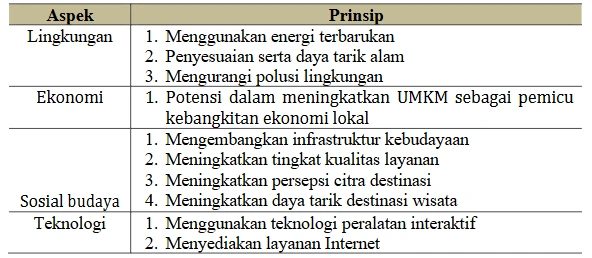
Source: Sanazshafieee, et al. (2019)
example of a beach planning study that applies the concept of e-based beach tourism planningCo-tourism This is Taipa Beach in Kendari, Southeast Sulawesi. based on principle Eco-tourism the, Fatmawati, et al (2022) Conducting analysis that Taipa Beach requires the application of renewable energy for sustainable development. Then also, natural connectivity and design, utilization of existing vegetation combined with additional vegetation.
This environmentally friendly arrangement is expected to be able to reduce various environmental pollution like pollution air, pollution visuals and so on. Increase Interactive Technology is also part of the application of the planning concept. Eco-tourism on the Taipa beach. The following is the design of Fatmawati, et al (2022) related to the concept of coastal tourism planning based on Eco-tourism At Taipa Kendari Beach.
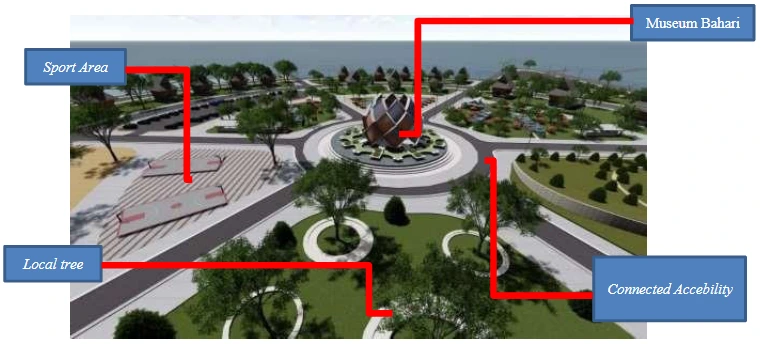
Source: Fatmawati, et al (2022)
Ecomparism
In the midst of the increasing interest of tourists to enjoy the charm of nature, the concept of ecomparism emerged which combines two important elements. Eco-friendly tourism elements and well-organized destination management are part of the concept Ecomparism.
Word Ecomparism comes from a combination of terms Eco-Compact Tourism. That is, tourism that maintains the natural ecosystem while providing complete and comfortable attractions and facilities for visitors. The thing that distinguishes Ecomparism from other tourism models is the main focus on how to maintain a balance between exploitation and environmental conservation.
Concept Ecomparism Carrying the principle of the triangle of sustainability which includes three main pillars, namely ecology (planet), economy (profit), and socio-cultural (people). Some of the standards or principles that exist in the concept of coastal tourism planning are the speed of the current, the cover of the coast, the topography of the sea. Then also aesthetics and authenticity, attractions, supporting facilities, and so on.
An example of a study that explains that the concept Ecomparism This is the study of Putra, et al (2018) who analyzes the tourism planning of Teloek Dalam Beach in Bintan, Riau Islands Province. The ecosystem at Teloek Dalam Beach itself consists of three types, namely coastal ecosystems, seagrass ecosystems, and river ecosystems. With each ecosystem has unique characteristics. The combination of these ecosystemsEcotone) makes the Teloek Dalam Beach area very rich in various potential biotic and abiotic components for coastal tourism.
In planning this tourist area, there are 13 activities that tourists can enjoy, such as fishing, boating, looking for shellfish, swimming, taking pictures, picnics, and playing beach ball. In addition, visitors can also enjoy beach volleyball activities, kite flying, stay, enjoy the sunrise, buy souvenirs, and taste local culinary specialties that still pay attention to the balance and nature of the Teloek Dalam Beach area.
Also read: Implementing waste management practices for a clean tourist environment
Conclusion
The concept of sustainable beach tourism planning is very important to ensure that tourist destinations remain attractive, environmentally friendly, and provide benefits to local communities. Through approach Eco-tourism and Ecomparism, we can create tourist areas that not only preserve nature but also provide sustainable economic value. However, in order for the planning and management of this coastal destination to run effectively, special skills are needed in designing and managing tourism that is balanced between conservation, economy, and socio-cultural.
For that, LSP Jana Dharma Indonesia provide Consultant certification in the field of sustainable tourism, which can help you or the coastal destination management team to master concepts such as Eco-tourism and Ecomparism more deeply. With this certification, you will get the practical knowledge and skills needed to design a beach tour that is not only attractive to tourists, but also sustainable. Don’t miss this opportunity to improve your professionalism in the world of sustainable tourism. Join us at LSP Jana Dharma Indonesia and create a beach tourism destination that is environmentally friendly and profitable.
For more information and registration process, contact us:
Whatsapp : +6282322795991
Instagram: @jana_dharma_indonesia
Email : lspp.janadharmaindonesia@gmail.com