Yogyakarta has always been Indonesia’s leading tourist destination. A city that combines the richness of culture, natural beauty, and the dynamics of modern life in a difficult package the other areas match. However, there is one challenge that has been hampering the growth of DIY tourism optimally. The challenge of infrastructure connectivity is not fully adequate to accommodate the surge in tourists which continues to increase every year.
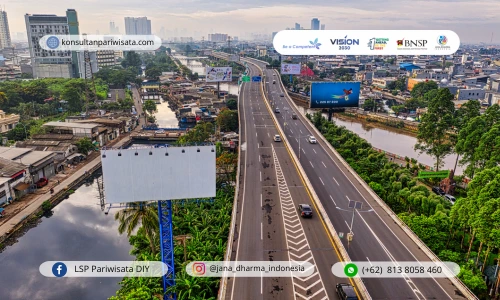
The DIY toll road project is present in response to the challenge. This is an infrastructure leap that will not only change the face of mobility in Yogyakarta. However, it also has the potential to transform the entire tourism ecosystem and the regional economy fundamentally.
Overview of the DIY Toll Project
The DIY toll road project includes two strategic toll roads that are under construction and will form a connectivity network that connects Yogyakarta with important areas in Central Java.
Jogja–Bawen Toll Road Sexy 1
The Jogja–Bawen toll road is a toll road that connects Yogyakarta with Bawen in Semarang Regency. This toll road stretches for about 75 kilometers that crosses various strategic areas in DIY and Central Java. Based on the report Compass, Section 1 of the Jogja–Bawen Toll Road which connects Yogyakarta with Banyurejo in Magelang Regency is the first phase of development which is being accelerated and is targeted to operate in the near future.
In addition, the presence of the Jogja–Bawen toll road will significantly cut the travel time between Yogyakarta and Semarang. which previously could reach 3-4 hours through the conventional route to only about 1.5-2 hours. This cut in travel time opens up opportunities for the movement of tourists who are much more efficient and comfortable between two major tourist cities in Central Java.
Jogja–Solo Toll Road
The second toll road that is part of the DIY toll road project is the Jogja–Solo toll road. This is a strategic segment that connects the two cities with the richest cultural and historical richness on the island of Java. According to the report CNN Indonesia, The Jogja–Solo toll road, which spans about 96 kilometers, will cut the travel time from Yogyakarta to Solo from about 2 hours to only 45–60 minutes.
Thus, the two cities that have been the most popular cultural tourism destinations in Indonesia will be connected in one integrated tourism corridor. This is to create opportunities for cross-city tour packages that are much more attractive and competitive.
Also read: IMPACT OF THE IRAN-US WAR: Tourists are missing, ASN is even WFH tourism?
Prediction of the DIY Toll Project to Boost the Tourism and Economy Sector
The economic impact of the DIY toll road project goes far beyond just physical infrastructure development. Based on a study of Jogja Daily, the total economic output that the DIY toll road project produces is estimated to reach a very significant figure, namely 26.06 trillion rupiah. This is a figure that reflects how big the potential for the economic transformation brought by this connectivity infrastructure development.
Therefore, the construction of the DIY toll road has the potential to cause a very large multiplier effect on the regional economy. In addition, the multiple impacts that flow to various sectors simultaneously and continuously.
The multiplier effect of the DIY toll road project will be felt concretely in the following economic dimensions:
1. Tourism Sector
Ease of access and cut travel time directly reduces travel costs and obstacles for tourists. Both those who come from Jakarta via the Trans Java toll corridor, from Semarang via the Jogja–Bawen toll road, and from Solo via the Jogja–Solo toll road. In addition, based on the data DIY Central Bureau of Statistics, tourist visits to DIY in 2023 reached more than 7.5 million people. Therefore, the projected figure soared significantly along with the full operation of the DIY toll road project.
2. MSME Sector and Creative Economy
The significant increase in the flow of tourists directly encourages the growth of MSMEs from culinary, handicrafts, lodging, to local transportation services. Based on the report Antara News, tourist areas along the DIY toll corridor, including Borobudur, Prambanan, and the South Coast area are predicted to experience a significant increase after the full operation of the toll road.
3. Property and Investment Sector
Based on the report Indonesian business, the areas along the DIY toll corridor have a significant appreciation of property value even before the toll road fully operates encourages the entry of new investment in the hotel, resort, commercial and shopping centers which in turn creates large numbers of new jobs..
4. Logistics and Distribution Sector
Better efficiency of distribution of goods through toll networks will reduce logistics costs for DIY agribusiness and manufacturing products. Thus, the competitiveness of local products in the national and international markets will increase in a sustainable manner.
Also read: Discover the secret to success in finding sources and making the best tour packages
How do tourism consultants view DIY toll projects?
From the perspective of professional tourism consultants, the DIY toll road project is the most significant strategic momentum in the history of Yogyakarta tourism development in the last decade. However, this great opportunity will not automatically produce optimal tourism growth without strategic and coordinated planning and management.
Tourism consultants view at least three crucial things that DIY tourism stakeholders should immediately consider:
1. Destination readiness to welcome the surge in visits
Good toll road infrastructure will only be effective if tourist destinations at the end are also ready, from parking capacity, service quality, cleanliness standards, to the tourist experience offered. Therefore, tourism consultants emphasized the importance of upgrading the destination in parallel with the construction of toll roads, not waiting for the toll road to be completed and then improving.
This is in line with the recommendations Ministry of Tourism and Creative Economy which encourages the development of supporting tourist destinations along the new infrastructure corridor as part of the national sustainable tourism strategy.
2. Development of integrated cross-corridor tour packages
The Jogja–Solo toll road and the Jogja–Bawen toll road create extraordinary opportunities to develop cross-city tour packages that connect cultural ecosystems in one cohesive and interesting travel narrative. In addition, based on the report seconds of travel, the trend of tourists who combine visits to Yogyakarta and Solo in one trip continues to increase. Therefore, this trend will strengthen with the full operation of the Jogja–Solo toll road.
3. Empowerment of Local Tourism Human Resources
The surge in tourists that is predicted to occur after the operation of the DIY toll road requires competent tourism human resources. Such as certified tour guides, professional destination managers, and tourism consultants who are able to design sustainable development strategies. Thus, investing in certification and improving the competence of tourism human resources is a step that you cannot delay by anyone who wants to optimally utilize the momentum of the DIY toll road project.
Experienced tourism consultants also reminded that the multiplier effect of the DIY toll road project will not be evenly distributed by itself. This requires a smart destination marketing strategy, good tourism governance, and a tourism business ecosystem that is ready to ensure the economic benefits of 26.06 trillion rupiah is really felt by all levels of DIY society, not just by a handful of big business people.
Also read: Listen and learn the requirements to become a tourism consultant in 2026
It’s Time to Increase Credibility with BNSP Tourism Consultant Certification
The DIY toll road project is the most transformative catalyst for tourism and economic growth in Yogyakarta. However, the potential of 26.06 trillion rupiah of economic output and large multiplier effects will only be realized if the entire DIY tourism ecosystem from destinations, human resources, tourism products, to marketing strategies is prepared seriously, professionally, and planned.
Therefore, this momentum is the best time for DIY tourism practitioners and professionals to improve their competence. This is to rise to a higher level to be ready to become a major player in the tourism explosion that will soon occur as the DIY toll road project is fully operational.
Want to become a professional tourism consultant who is ready to take advantage of the great opportunities of the DIY toll road project? get BNSP tourism consultant certification together LSPP JANA DHARMA INDONESIA The official tourism professional certification body is licensed by BNSP which has helped hundreds of Indonesian tourism practitioners achieve official competence recognition in the field of tourism consulting.
At LSPP Jana Dharma Indonesia, the tourism consultant certification process runs transparently, professionally, and together with experienced assessors who fully understand the dynamics of the Indonesian tourism industry. Including strategic opportunities created from connectivity infrastructure development such as the DIY toll road project. Consult your certification needs with LSPP Jana Dharma Indonesia now. Because the best momentum to become a certified tourism consultant is today.
For free consultation, contact us via:
WhatsApp: +62 813 8058 460 or +622123569054
Instagram: @jana_dharma_indonesia
Email : lspp.janadharmaindonesia@gmail.com